Good to know: Liveaboard Labuan Bajo is operated by Komodo Luxury, a real award-winning Indonesian liveaboard operator (TripAdvisor Travelers’ Choice 2022–2025, founded 2015, part of Juara Holding Group Limited). Komodo National Park (UNESCO 1991) requires park entry fees/permits — general information, verify current rates. Dive-site conditions and seasons are indicative and vary; Komodo currents are strong and many north sites are advanced. Marine life — mantas, hammerheads — is seasonal and wild, and can never be guaranteed. Prices are indicative ranges, by quote, and vary by vessel, cabin, season, trip length and open-vs-private. Enquiries and booking via WhatsApp +62 811-3823-875 and [email protected].
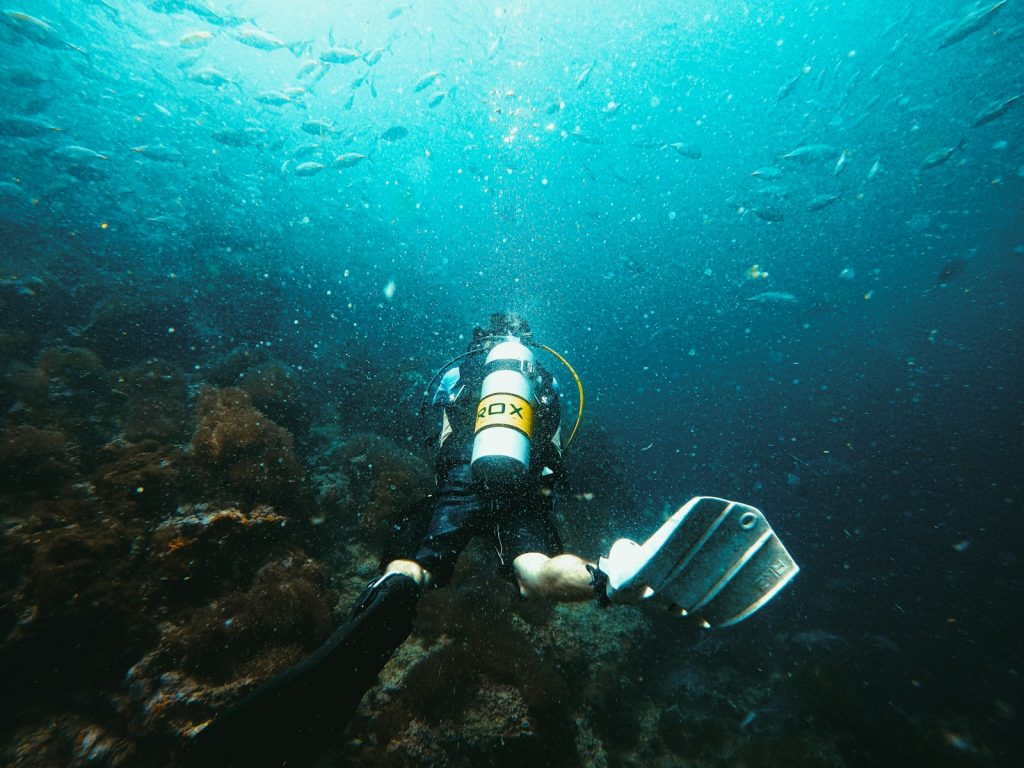
Komodo diving currents are the fast-moving water masses created as the Pacific and Indian Oceans squeeze through the narrow channels of Komodo National Park. They shape everything about your diving here: safety procedures, suitable dive sites for your level, and the kind of marine life you’ll actually see.
As a PADI Dive Guide based in Labuan Bajo, I’ll be blunt: Komodo is one of Southeast Asia’s best current-driven destinations, but also one of the easiest places to get in trouble if you underestimate the water. This page explains how komodo diving currents work, what “komodo strong current diving” really means, and how to keep komodo dive safety front and center on your liveaboard trip.
1. Why Komodo Has Such Strong Currents
Komodo National Park sits right on the Indonesian Throughflow, where huge volumes of water move between the Pacific and Indian Oceans. That water has to pass through narrow straits and over complex underwater topography.
Key effects:
- Tidal exchanges create powerful inflows and outflows several times per day.
- Underwater ridges and pinnacles accelerate water into downcurrents, upcurrents, and horizontal jets.
- Different water masses (warmer/colder, saltier/fresher) meet and can create very localized conditions.
That’s why two dives on the same site in Komodo can feel totally different. You can have a gentle drift at Castle Rock in the morning and a washing machine in the afternoon.
Komodo diving currents are not “one-size-fits-all.” Some sites are suitable for Open Water divers in mild conditions; others are strictly for experienced, current-happy divers with excellent buoyancy and situational awareness.
2. How Komodo Currents Feel Underwater
“Strong current” is vague. Here’s what you may actually experience in Komodo:
- Mild drift (easy): You barely fin, your bubbles rise straight up or at a slight angle, you glide over the reef. Great for beginners on the right depth and profile.
- Medium current (sporty): You need to fin to stay near the guide or a specific bommie. If you stop, you move. Fish are tightly angled into the flow.
- Strong “hook-in” current (advanced): You hold a rock, reef hook, or stay tucked behind a bommie. Let go, and you’re off the “station” fast. This is typical at sites like Castle Rock in peak flow.
- Downcurrents & upcurrents (advanced+): You feel yourself being pulled down or lifted. Bubbles can curve downward. This happens along walls or near corners (e.g., Batu Bolong edges, certain parts of Cauldron/Shotgun).
- Turbulence / washing machine (advanced+): Direction and strength change rapidly in a small area. Classic at pinch points between islands and around rocky points on big tides.
In Komodo, direction matters as much as strength. Some sites are only diveable on a specific tide direction or slack window. Good liveaboard operations in Labuan Bajo time entries accordingly and will skip a site if it doesn’t line up.
3. Core Komodo Dive Safety Principles
Komodo dive safety is a shared responsibility: boat crew, guides, and you. On our Komodo Luxury liveaboard cruises, we pay obsessive attention to this because currents here are powerful and unpredictable.
Essential safety habits in Komodo:
- Use an SMB (surface marker buoy): Personal DSMB + reel is not optional here, it’s standard equipment.
- Listen closely to site-specific briefings: “Same same but different” doesn’t apply. Batu Bolong is a completely different risk profile from Sebayur Kecil.
- Stay with your guide: Especially on advanced current dives. Do not “do your own thing” in Komodo.
- Respect limits: If a site is briefed as “advanced” and you have 10 dives and no drift experience, sit it out or ask for an easier option.
- Honest self-assessment: If you’re already nervous in mild current, now is not the time to push yourself at Castle Rock.
On any Komodo Luxury liveaboard, we group divers by experience as best as conditions and logistics allow, and we will actively recommend alternate dives if a planned site looks beyond someone’s comfort zone.
4. Typical Komodo Dive Conditions: North, Central, South
Conditions vary a lot across the park. This table gives broad patterns, not absolute rules.
| Area | Temperature (indicative) | Visibility (indicative) | Current Profile | Typical Level |
|---|---|---|---|---|
| North Komodo | 27–29°C | 15–30+ m | Often strong, exposed; classic komodo strong current diving at pinnacles | Intermediate to advanced |
| Central Komodo | 26–29°C | 10–25 m | Mix of sheltered reefs, channels, and manta sites; currents vary | All levels (site-dependent) |
| South Komodo (incl. Padar) | 22–27°C, cooler upwellings seasonally | 8–20 m (can be lower in plankton blooms) | Mostly moderate; some surge, occasional strong currents at corners | Open Water and above |
Data is indicative only, based on our regular guiding in Komodo. Conditions change with tides, moon phase, and season.
5. Site-by-Site: Where Currents Demand Respect
Below is a non-exhaustive overview of signature Komodo sites and how they relate to komodo diving currents and safety. Depths are intentionally indicative ranges, not exact numbers, because we tailor profiles to certification and conditions.
5.1 Batu Bolong (Central Komodo) – Advanced, No Arguments
Batu Bolong is a small rock in the middle of a deep channel, rising to just above the surface. Think of it as a current magnet.
- Depth range (indicative): Shallow reef from a few meters, sloping down beyond recreational depths.
- Current profile: Strong, often split. Intense downcurrents and horizontal jets on exposed sides.
- Level: Advanced only, confident in current, excellent buoyancy.
How we dive it on liveaboard:
- Only on suitable tides.
- We stay on the protected side; the “wrong” side is not a playground.
- Hard rule: do not descend beyond your planned depth just to chase fish. Downcurrents can form lower on the slope.
- We abort or change the plan if we see suspicious water movement (boils, swirling, or heavy white water on the surface).
Batu Bolong is spectacular for fish density and coral, but it has zero forgiveness for sloppy buoyancy or poor awareness.
5.2 Castle Rock (North Komodo) – Classic Komodo Strong Current Diving
Castle Rock is a submerged seamount in North Komodo, often hit by strong, clean current that brings schooling fish, trevally, and sometimes sharks.
- Depth range (indicative): Top of the rock roughly in mid-depths; base deeper, beyond standard beginner profiles.
- Current profile: Medium to very strong, depending on tide and moon. Often “hook-in” diving on the up-current side.
- Level: Strong intermediate to advanced.
Typical advanced profile:
- Negative or fast descent to the top area to avoid being swept off the site in midwater.
- Positioning at an up-current “station,” sometimes using reef hooks where appropriate.
- If current is too strong or divers are hesitant on the descent, the safer option is to skip or do a shallower, more sheltered site.
Castle Rock is a textbook example of where honest skill assessment and a solid guide make the difference between an incredible dive and an uncontrolled ride.
5.3 Crystal Rock (North Komodo) – Similar Muscle, More Structure
Crystal Rock is another iconic North Komodo pinnacle, partially exposed at low tide with ridges and canyons underwater.
- Depth range (indicative): Shallow ridges to deeper slopes.
- Current profile: Very tide-dependent. Can be moderate and manageable or extremely fast with complex flow.
- Level: Intermediate to advanced, depending on conditions.
With the right tides, it offers exciting but manageable drift, often with schooling fish and pelagics. On big moons, we adjust plans, entrances, or simply choose safer alternatives.
5.4 Cauldron / Shotgun (Between Gili Lawa Darat & Gili Lawa Laut)
This is a channel dive with a pinch point that can behave like its nickname suggests: a shotgun.
- Depth range (indicative): Mostly in recreational depths.
- Current profile: Channel drift leading into a strong jet through the “shotgun,” with eddies and changing flow.
- Level: Solid intermediate and above, comfortable in variable current.
Key safety points:
- Clear briefing on body positioning in the shotgun section.
- Do not descend deep chasing rays or sharks into the channel walls where downcurrents can form.
- Stick right behind your guide in the fast section.
5.5 Manta Point / Makassar Reef (Central Komodo)
Manta Point (also called Makassar Reef) is famous for manta interactions, especially in the right season, but currents can still surprise you.
- Depth range (indicative): Generally shallow drift over rubble and patches of coral.
- Current profile: Wide, shallow channel; current can range from gentle to strong.
- Level: Suitable for Open Water with drift experience and good guidance.
We treat this as a long drift dive over a large area:
- Entry point adjusted based on tide direction.
- Precise “stationing” at cleaning stations to avoid crowding mantas.
- Surface support crucial; groups can surface spread out.
Manta sightings are never guaranteed. They are wild animals; activity depends on plankton, season, and luck.
5.6 Sebayur, Siaba, and Other Gentler Reefs
Sites like Sebayur Kecil, Siaba Besar, and several fringing reefs in central Komodo offer more forgiving conditions:
- Depth range (indicative): Ideal Open Water depths.
- Current profile: Typically mild to moderate; can be stronger at corners.
- Level: All levels, depending on specific route and tide.
These sites are perfect for:
- Check dives at the start of a liveaboard itinerary.
- Training dives (Advanced, specialties).
- Less experienced divers who want to enjoy Komodo without going straight into the “washing machines.”
Even here, Komodo rules apply: we still plan around tides, watch for changing conditions, and keep a strong safety culture.
6. Seasonality: How Time of Year Affects Currents & Conditions
Komodo is diveable year-round from Labuan Bajo, but seasons influence currents, visibility, and what you see.
Broad seasonal patterns (indicative, not guaranteed):
- April–November (drier months):
- Generally more stable weather, especially June–September.
- North and central sites often have clearer water.
- Currents can feel stronger on big tidal exchanges and around full/new moons.
- December–March (wetter months):
- Increased chance of rain and wind; some days of rougher surface conditions.
- Central and south can have rich plankton; mantas often active in certain periods.
- Variable visibility; currents still driven by tides but boats may shift site choices due to wind and swell.
Within each day, the moon and tide play bigger roles than the month. On our Komodo Luxury phinisi liveaboards, we check tide tables daily and adjust the sequence of Batu Bolong, Castle Rock, Cauldron, etc., to slot into safer windows.
Manta rays and hammerheads are seasonal and wild:
- Mantas: Commonly encountered in specific seasons and conditions around Komodo, but never promised.
- Hammerheads: Sightings in Komodo are occasional and highly seasonal/depth- and site-specific. Treat any hammerhead sighting here as a bonus, not a given.
If you want personal advice on which months best match your goals and experience, reach out to our team via plan your trip or WhatsApp at +62 811-3823-875.
7. Certification, Experience & Training Recommendations
Komodo doesn’t require “tech-level” training for most recreational dives, but it does demand realistic preparation.
7.1 Minimum Levels by Trip Style (Indicative)
- Relaxed, central-focused 3–4 day liveaboard
- PADI Open Water (or equivalent), 10+ logged dives, prior drift experience recommended.
- North + central itineraries with pinnacles (Castle Rock, Crystal Rock)
- Advanced Open Water (or equivalent), 30–50+ dives, recent drift and current experience, very solid buoyancy.
- Photography-intensive trips
- Good current skills plus comfort managing a camera without losing awareness; strong gas management.
These are guidelines, not rigid rules; our actual decision on-site depends on how you dive, not just your card count.
7.2 Skills You Should Have Before Tackling Strong Current Sites
- Controlled descents: You can follow a line or guide down fast without yo-yoing or popping up.
- Neutral buoyancy in midwater: You do not need to grab the reef to hold depth.
- Efficient finning: Frog kick and modified frog save a lot of energy in current.
- SMB deployment: You can inflate and deploy a DSMB safely from midwater without entangling yourself or rocketing up.
- Gas and NDL awareness: Currents can make you work harder; you must monitor your gas and not blindly follow others.
If you’re missing some of this, a Komodo liveaboard can still work—provided you’re happy to:
- Focus on central and southern sites.
- Join training dives (e.g., Advanced, Drift, Peak Performance Buoyancy) early in the trip.
- Skip the most demanding sites until you and your guide are confident.
8. Liveaboard vs Day Trips: Safety & Currents
As the Labuan Bajo liveaboard authority and operator, we’re biased toward liveaboards for serious divers, but the reasons are practical, not just marketing.
8.1 Advantages of Liveaboards for Current Management
- Flexible timing: We can hit Batu Bolong or Cauldron during the best tide window, not whatever time a long day-trip transit allows.
- Progressive build-up: Start with easier central sites; let guides assess your real skill before moving to heavier currents in the north.
- Consistent teams: Same guides and crew watching you over several days = better understanding of your abilities and limits.
- Multiple dives/day: If the first dive shows that currents are too much for someone, we can easily adjust the next dives.
Komodo Luxury operates its own luxury phinisi liveaboard fleet — Komodo Signature and Komodo Prestige — on both open trips and private charters out of Labuan Bajo, under Juara Holding Group Limited. Since 2015, the company has focused specifically on Komodo National Park cruises, and has been recognised with TripAdvisor awards from 2025 and 2026. We don’t need to oversell it; the safety and repeat guests speak for themselves.
8.2 Indicative Trip Lengths & Focus
- 3D/2N or 4D/3N: Central-focused, some north or south sites depending on conditions and route.
- 5D/4N or 6D/5N: More balanced itineraries allowing north pinnacles plus mantas and dragons.
- 7+ days or private charter: Maximum flexibility to chase conditions and your goals (within safety limits).
Pricing on our Komodo Luxury liveaboards is by quote, varying with season, trip length, cabin category, and private charter vs. open trip. As a rough guide (last verified June 2026), multi-day Komodo liveaboard cruises in a premium phinisi typically start from the mid-hundreds of USD per person for shorter trips, scaling to higher ranges for longer or fully private charters. For an accurate, up-to-date quote, contact our team directly.
9. Park Fees, Permits & Regulations
Komodo National Park was established in 1980 and granted UNESCO World Heritage status in 1991. That brings both protection and rules.
Essentials for divers (general info only):
- Park entry & diving fees: Charged per person and, on some tickets, per day. They differ for Indonesian citizens vs foreigners and can change without much warning.
- Marine conservation rules: No touching or collecting marine life, no feeding, careful buoyancy over corals, no anchoring on reefs.
- Licensed operators: Boats must hold appropriate permits to operate in the National Park.
On Komodo Luxury trips, our Labuan Bajo team handles park permits and fee payments as part of your package; you’ll see a breakdown in your pre-trip information. We do not publish exact fee lists here because rates change; always verify the latest numbers with our staff before you book.
10. Practical Safety Tips From the Boat Deck
From real guiding experience in Komodo, here are concrete habits that make a difference:
- Tell us your real experience: Your logbook doesn’t impress or disappoint us; it guides our planning.
- Ask “what if” questions in briefings: What if I get separated? What if I get caught in a downcurrent? Hearing the answers before you hit the water helps.
- If you feel out of control, signal early: Don’t wait until you’re low on gas and panicking in strong flow.
- Surface procedures: Inflate BCD fully, deploy DSMB, and stay together. The park is big; a small orange sausage is easier to see than a head.
- Cold and current together: South Komodo can be cooler, and current makes you work more. Use enough exposure protection.
On our liveaboards, we always carry:
- Oxygen kits.
- First-aid equipment.
- Multiple SMBs and spare gear.
- Radio and communication equipment for coordination in the park.
None of this replaces your own judgment, but it’s the baseline we consider non-negotiable in Komodo.
If you’re planning a Komodo liveaboard and want honest advice on how currents will match your level, talk directly to our Komodo Luxury specialists via plan your trip or WhatsApp at +62 811-3823-875. Share your number of dives, last dive date, and which sites you’re dreaming about; we’ll tell you plainly what makes sense and what doesn’t.
FAQs: Komodo Diving Currents & Safety
Is Komodo too difficult for Open Water divers?
No, Komodo is not automatically too difficult for Open Water divers, but you need the right sites and honest expectations. Many central and some southern reefs are suitable for newer divers in mild conditions, especially from a liveaboard that can time tides. The famous heavy-current sites in the north (Batu Bolong, Castle Rock, Crystal Rock, Cauldron on big tides) are more appropriate for Advanced divers with solid drift experience.
Do I really need a DSMB to dive Komodo?
Yes. A DSMB and reel are standard safety gear in Komodo because currents and surface drift can separate divers from the main boat. On our liveaboards we strongly recommend every buddy team carries at least one DSMB and knows how to deploy it from midwater. Guides also carry SMBs, but personal redundancy is part of good Komodo dive safety.
How dangerous are downcurrents in Komodo?
Downcurrents in Komodo can be serious if you are not prepared or if you stray into the wrong part of a site. They tend to form along steep walls or at corners and saddles where water is deflected downward. With proper briefings, staying close to the reef contour, and not exceeding planned depths, they are manageable. Training yourself to swim out and away from the wall instead of fighting straight up is key. Your guide should explain the escape procedure before dives on sites where downcurrents are possible.
When is the best time of year for safe diving conditions in Komodo?
Komodo is diveable all year, but many divers prefer the generally drier and more stable months from roughly April to November. Within that, June–September often offer reliable surface conditions and good visibility in the north and central regions. However, “safe conditions” in Komodo are more about daily tides and local weather than the month alone, so a good operator will adjust the plan throughout your trip. No month can guarantee perfectly calm seas or gentle currents.
Can you guarantee manta or hammerhead sightings in Komodo?
No. Mantas and hammerheads in Komodo are wild, free-ranging animals, and no responsible operator will guarantee sightings. Certain seasons and conditions raise your chances at key manta sites, and very occasional hammerhead encounters happen at specific, often deeper locations, but you should treat them as hoped-for highlights rather than promises. What Komodo consistently delivers is healthy reefs, high fish biomass, and thrilling current-driven dives when planned and executed safely.